Beschreibung
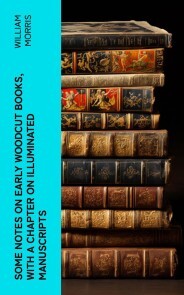
In "Some Notes on Early Woodcut Books, with a Chapter on Illuminated Manuscripts," William Morris delves into the intricate world of early printed books and manuscripts, examining the aesthetics and techniques of woodcut illustrations in relation to illuminated texts. The work is marked by Morris's advocacy for craftsmanship in the age of industrialization, emphasizing the significance of artistry in the printed form. With a meticulous blend of scholarly analysis and appreciation for the beauty of early book design, this text serves as both a historical document and a call to revive the lost art of bookmaking, in which the visual elements enhance the literary experience. William Morris (1834-1896) was a British designer, writer, and socialist, whose deep-seated passion for the medieval arts profoundly influenced his views on literature and craftsmanship. His immersion in the Pre-Raphaelite movement and his quest to counteract the mass production of his time led him to explore the rich heritage of early printing. This exploration is not merely a niche interest; it reflects Morris's broader desire to reinstate a sense of beauty and individuality in art and literature. This book is highly recommended for anyone interested in the intersections of art and literature, as well as those who appreciate the history of bookmaking. Morris's insights provide valuable perspective for scholars and enthusiasts alike, inviting readers to consider the enduring significance of craftsmanship and visual storytelling in a contemporary context. In this enriched edition, we have carefully created added value for your reading experience: A succinct Introduction situates the work's timeless appeal and themes. The Synopsis outlines the central plot, highlighting key developments without spoiling critical twists. A detailed Historical Context immerses you in the era's events and influences that shaped the writing. An Author Biography reveals milestones in the author's life, illuminating the personal insights behind the text. A thorough Analysis dissects symbols, motifs, and character arcs to unearth underlying meanings. Reflection questions prompt you to engage personally with the work's messages, connecting them to modern life. Hand¿picked Memorable Quotes shine a spotlight on moments of literary brilliance. Interactive footnotes clarify unusual references, historical allusions, and archaic phrases for an effortless, more informed read.
Über William Morris
William Morris (1834¿1896) was a seminal figure in the British Arts and Crafts movement and a prolific writer, designer, and socialist. His influence touched many aspects of design and art in the late 19th century. While widely recognized for his decorative arts accomplishments and his social and political activism, Morris was deeply enamored with medieval literature and the art of bookmaking. His exploration in the history of the book culminated in texts such as 'Some Notes on Early Woodcut Books, with a Chapter on Illuminated Manuscripts,' wherein Morris channels his passion and scholarship into examining the craft and aesthetics of book production during the incunabula period and the Middle Ages. His literary style is rooted in a romantic revivalism, and his writings often manifest a yearning for the beauty and craft of the past, as well as an ambition to restore those values in contemporary society. Morris' work in this area was not merely an academic pursuit but part of a larger philosophy that sought to integrate beauty with utility in everyday objects¿a principle that laid the groundwork for modern design philosophies. His commitment to artisanal excellence set a standard in both the literary and decorative arts, reinforcing the ideals of the Arts and Crafts movement in opposition to industrial mass production.
E-Book Informationen
Alle hier erworbenen E-Books können Sie in Ihrem Kundenkonto in die kostenlose PocketBook Cloud laden. Dadurch haben Sie den Vorteil, dass Sie von Ihrem PocketBook E-Reader, Ihrem Smartphone, Tablet und PC jederzeit auf Ihre gekauften und bereits vorhandenen E-Books Zugriff haben.
Um die PocketBook Cloud zu aktivieren, loggen Sie sich bitte in Ihrem Kundenkonto ein und gehen dort in den Bereich „E-Books“. Setzen Sie hier einen Haken bei „Neue E-Book-Käufe automatisch zu meiner Cloud hinzufügen.“. Dadurch wird ein PocketBook Cloud Konto für Sie angelegt. Die Zugangsdaten sind dabei dieselben wie die Ihres Kundenkontos in diesem Webshop.
Weitere Informationen zur PocketBook Cloud finden Sie unter www.meinpocketbook.de.
Allgemeine E-Book-Informationen
E-Books in diesem Webshop können in den Dateiformaten EPUB und PDF vorliegen und können ggf. mit einem Kopierschutz versehen sein. Sie finden die entsprechenden Informationen in der Detailansicht des jeweiligen Titels.
E-Books ohne Kopierschutz oder mit einem digitalen Wasserzeichen können Sie problemlos auf Ihr Gerät übertragen. Sie müssen lediglich die Kompatibilität mit Ihrem Gerät prüfen.
Bei E-Books die mit Readium LCP geschützt sind erscheint bei dem ersten Öffnen auf ihrem Reader ein Hinweisfenster mit der Aufforderung ein Passwort einzugeben. Gleichzeitig öffnet sich ein Infofeld in dem das Passwort steht. Tragen Sie dieses Passwort in das Eingabefeld ein und bestätigen Sie die Eingabe. Danach öffnet sich das E-Book automatisch. Um E-Books die mit Readium LCP geschützt sind auf einem Tablet/Laptop/Smartphone lesen zu können, benötigen Sie ein Programm, das in der Lage ist, mit diesem Kopierschutz umzugehen. Das ist z.B. der Thorium Reader (Windows, Mac, Linux) oder die PocketBook App (iOS, Android). Fügen Sie das heruntergeladene E-Book in das Programm ein. Bei dem ersten Öffnen erscheint ein Hinweisfenster mit der Aufforderung ein Passwort einzugeben. Gleichzeitig öffnet sich ein Infofeld in dem das Passwort steht. Tragen Sie dieses Passwort in das Eingabefeld ein und bestätigen Sie die Eingabe. Danach öffnet sich das E-Book automatisch.
Um E-Books, die mit Adobe DRM geschützt sind, auf Ihr Lesegerät zu übertragen, benötigen Sie zusätzlich eine Adobe ID und die kostenlose Software Adobe® Digital Editions, wo Sie Ihre Adobe ID hinterlegen müssen. Beim Herunterladen eines mit Adobe DRM geschützten E-Books erhalten Sie zunächst eine .acsm-Datei, die Sie in Adobe® Digital Editions öffnen müssen. Durch diesen Prozess wird das E-Book mit Ihrer Adobe-ID verknüpft und in Adobe® Digital Editions geöffnet.